Mountain landscapes: features and curiosities
How mountains form, why vegetation changes with altitude, and what explains the variation in temperature and light in these environments.
- Published on
- Author
- Natural Horizons editorial team
- Reading time
- 7 min read
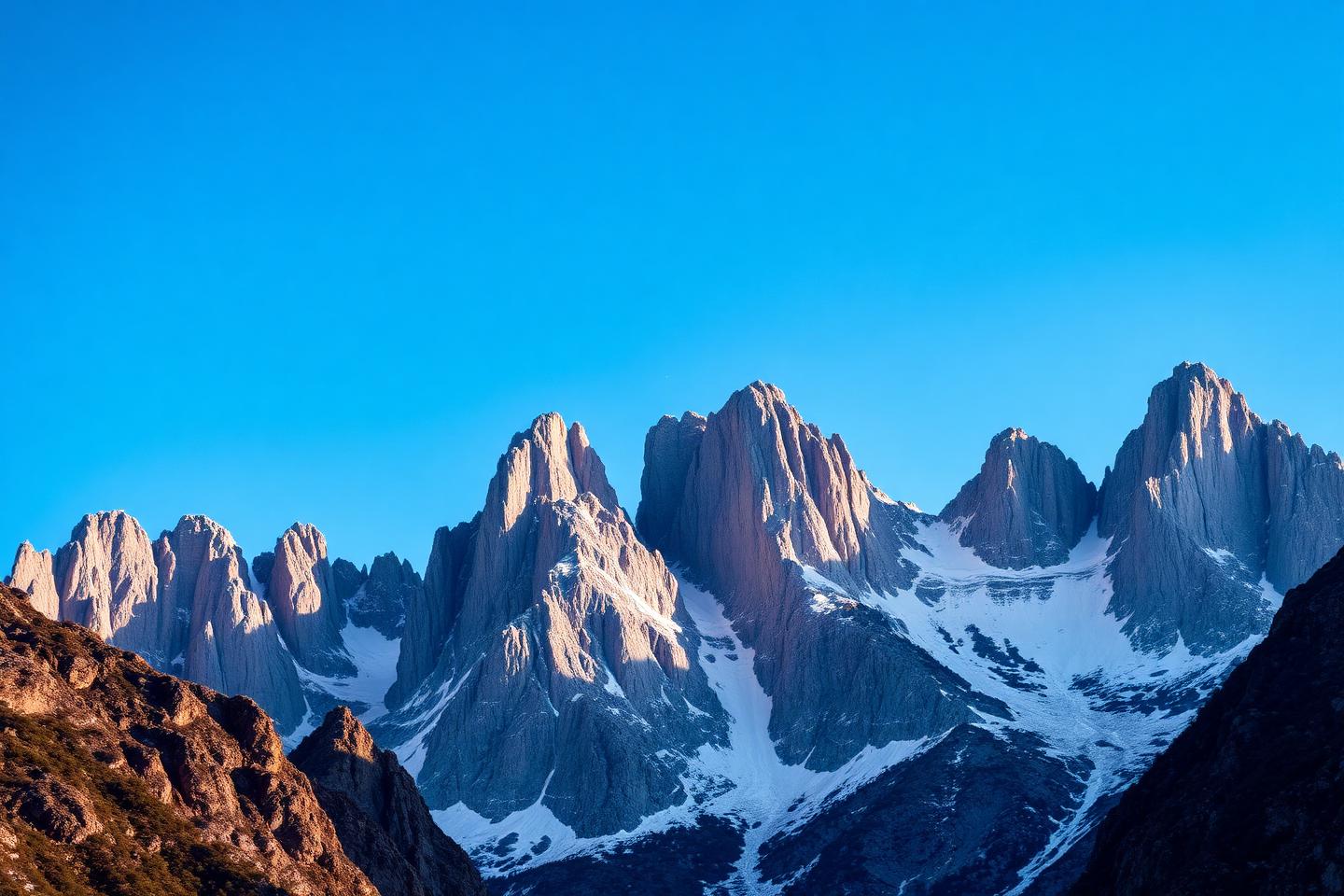
Mountains concentrate, within a few horizontal kilometers, environmental variations that on flat ground would require thousands of kilometers of travel. Climbing a slope is, in a sense, crossing several climate zones.
How they form
Most of the great ranges result from the collision of tectonic plates, which fold and lift layers of rock over millions of years. Other mountains have volcanic origins, built up from the successive accumulation of erupted material. There are also residual landforms: ancient terrains that resisted erosion better than their surroundings.
Why vegetation changes with altitude
Air temperature drops in a fairly predictable way as altitude increases. Less heat, more wind, and shallower soils progressively reduce plant size. This creates visible bands: dense forest at the base, lower forest in the middle, shrub vegetation above, and finally grassland and exposed rock.
The treeline
There's an altitude beyond which trees stop establishing themselves. This limit varies with latitude, wind exposure, and snow regime — in tropical regions it's much higher than at high latitudes.
Light, shade, and slope orientation
Two slopes of the same mountain can have quite different vegetation simply because they receive different amounts of sun throughout the day. The shadier face retains moisture longer; the sunnier face dries out faster and warms up more.
Curiosities that tend to surprise
- Clouds that always form at the same spot usually indicate moist air being forced upward along the slope.
- Colder air sinks and settles at the bottom of valleys at night, which can make the valley floor colder than the mid-slope.
- Patches of snow can persist in shaded crevices long after winter has ended.
- The same mountain changes color throughout the year due to snow, flowering, and shifts in the vegetation's moisture.
Precautions in mountain environments
Sharp temperature swings, more intense solar radiation, and rapid weather changes call for preparation: layered clothing, sun protection, enough water, and a time margin for the return. At high altitudes, the body's adaptation takes time and should be handled with proper guidance.
Conclusion
Reading a mountain landscape means observing layers — of rock, of vegetation, of climate. This exercise reveals the logic behind something that, at first glance, seems merely beautiful. Information about trail and altitude conditions should be confirmed with official sources before any activity.
Sources and further reading
External links lead to third-party websites, whose content is not controlled by Natural Horizons.
More articles
Why some mountains change appearance through the year
Seasonal snow, flowering, vegetation moisture, and the sun's angle: the factors that make the same mountain look different every season.
Ten natural landscapes that impress with their diversity
From tundra to mangrove: ten types of natural landscape, what defines them, and what to look for in each one during a visit.
Coastal landscapes and their transformation over time
Cliffs, dunes, sandbanks, and beaches in constant motion: how waves, tides, and wind redesign the coastline and what that means for visitors.
Newsletter
Get new stories and inspiration about natural landscapes straight to your inbox. Signing up is optional and you can unsubscribe anytime via the link in every email.