Coastal landscapes and their transformation over time
Cliffs, dunes, sandbanks, and beaches in constant motion: how waves, tides, and wind redesign the coastline and what that means for visitors.
- Published on
- Author
- Natural Horizons editorial team
- Reading time
- 7 min read
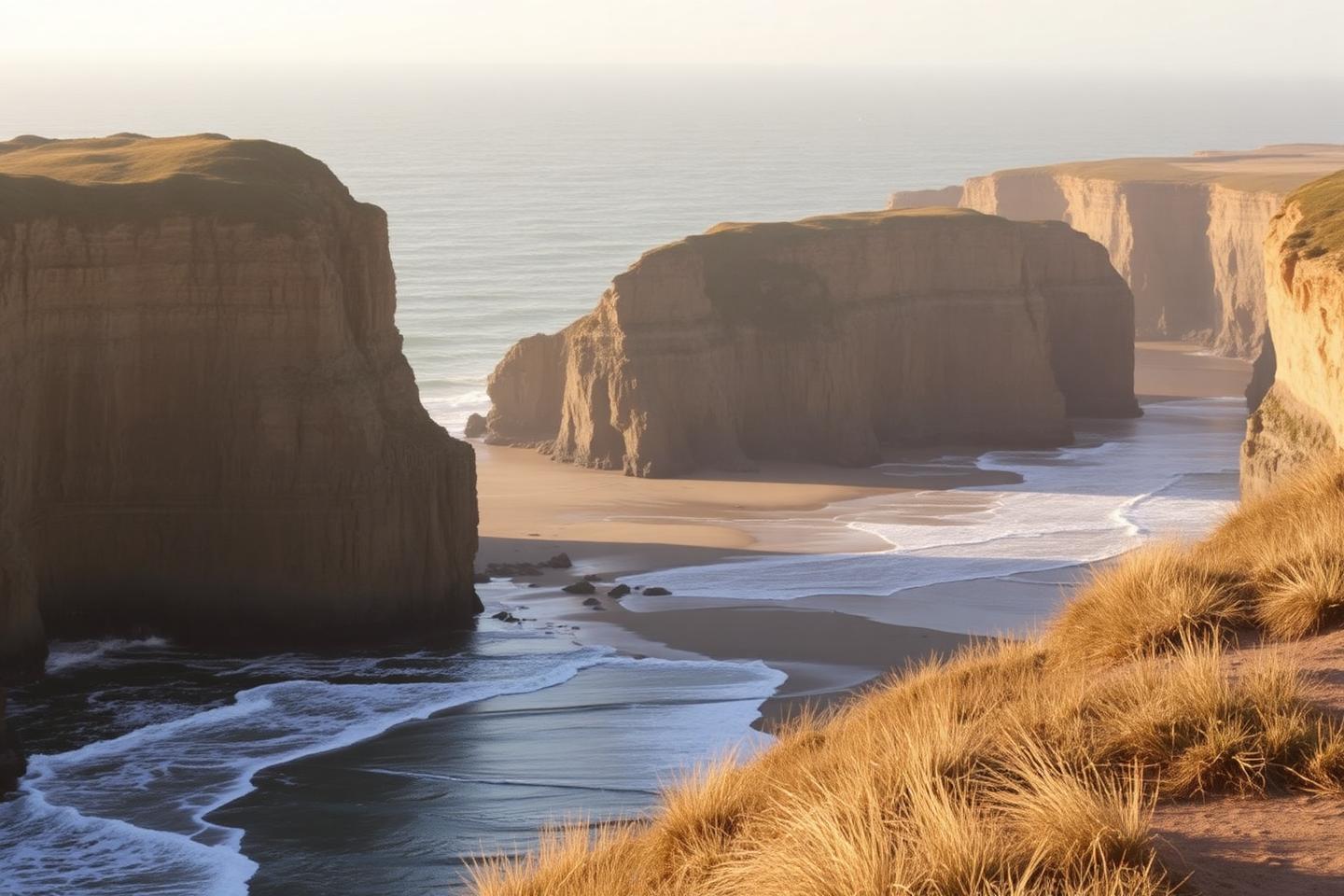
Coasts are the landscapes that change the fastest. While a mountain transforms on a geological timescale, a beach can look different between summer and winter of the same year.
The forces at play
- Waves: carry sediment along the coast and dig at the base of cliffs.
- Tides: define the strip of land alternately submerged and exposed.
- Wind: builds and shifts dunes, especially where fixing vegetation is missing.
- Rivers: deliver sediment to the sea and sustain beaches kilometers away from the river mouth.
Cliffs
Formed by the erosion of sedimentary rock or old terraces, cliffs continually retreat. Removing material at the base causes periodic collapses at the top. That's why both the edge and the foot of a cliff are risk areas — and many falls happen at points without visible warning signs.
Dunes and fixing vegetation
Frontal dunes act as a natural barrier against storm surges. The low vegetation covering them is what keeps the sand from being carried off by the wind. Stepping off the boardwalks breaks that cover and starts erosion processes that take years to reverse.
Coastal scrublands
Strips of vegetation on sandy soil between the beach and inland areas. They harbor species specialized in high salinity, little fresh water, and high soil temperature.
Seasonal changes
On many beaches, the profile becomes steeper and narrower during rougher-sea periods and widens again during calmer wave seasons. The sand doesn't disappear: it migrates to submerged sandbars and returns later. Recognizing this cycle prevents rushed conclusions about a beach's 'permanent' loss.
Human occupation and transformation
Buildings on dunes, retaining walls, and altered river flows interfere with sediment balance. A structure that protects one stretch of coast often speeds up erosion elsewhere, kilometers away.
Conclusion
Visiting the coast with this reading in mind changes the experience: instead of a fixed backdrop, a system in motion appears. Check local warnings about tides, currents, and closed areas before any activity on the coast.
Sources and further reading
External links lead to third-party websites, whose content is not controlled by Natural Horizons.
More articles
Ten natural landscapes that impress with their diversity
From tundra to mangrove: ten types of natural landscape, what defines them, and what to look for in each one during a visit.
How to photograph natural landscapes with natural light
Timing, light direction, composition, and field precautions for photographing landscapes using only natural lighting — including with a phone.
Mountain landscapes: features and curiosities
How mountains form, why vegetation changes with altitude, and what explains the variation in temperature and light in these environments.
Newsletter
Get new stories and inspiration about natural landscapes straight to your inbox. Signing up is optional and you can unsubscribe anytime via the link in every email.