Deserts and arid regions: landscapes of extremes
What defines an arid region, why cold deserts exist, how life adapts to water scarcity, and what precautions a visit requires.
- Published on
- Author
- Natural Horizons editorial team
- Reading time
- 7 min read
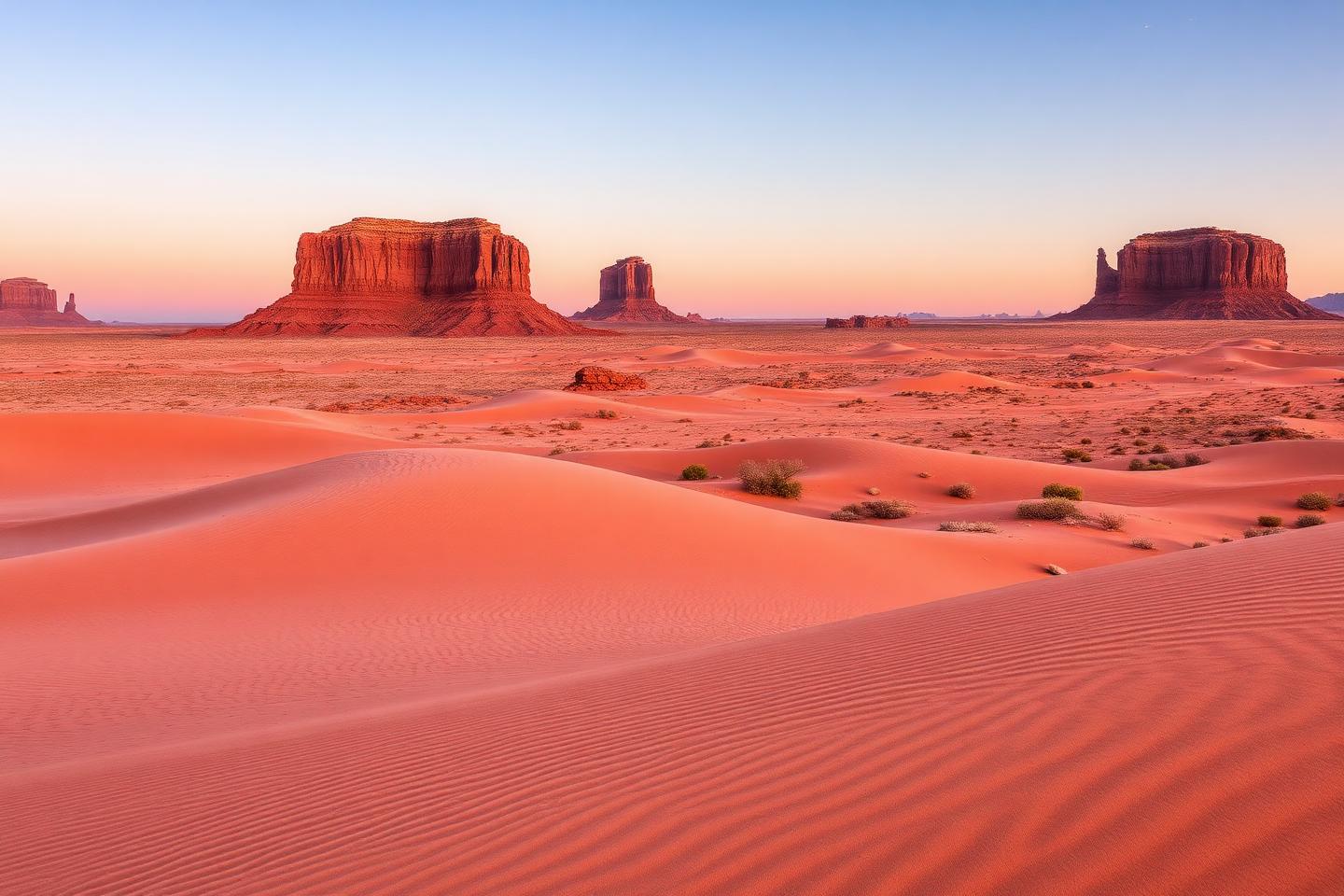
Deserts are often defined by the image of endless sand, but the real criterion is different: scarce precipitation relative to evaporation. That's why there are rocky deserts, gravel deserts, salt deserts, and even cold deserts.
Why they form
- Atmospheric circulation patterns that produce descending, dry air in certain bands of the planet.
- Rain shadow: mountain ranges that block moisture coming from the ocean.
- Continental distance: areas far from the sea receive little moisture.
- Cold ocean currents, which reduce evaporation near the coast.
Temperature swings
With little moisture in the air and almost no clouds, heat built up during the day dissipates quickly at night. The difference between daily highs and lows can be enormous — one of the reasons cold-weather clothing is a required item even in regions associated with heat.
How life adapts
Plants reduce their leaf surface, store water in succulent tissue, or grow very deep roots. Many animals are nocturnal, avoid the surface during the hottest hours, and get much of their water from food itself. Seeds can stay dormant for years and germinate together after a rare rainfall.
Biological soil crusts
In many arid regions, the surface is covered by a thin layer of organisms that stabilizes soil and reduces erosion. It's extremely fragile: a single footstep can destroy a structure that took decades to form. That's why sticking to marked trails is even more important in these environments.
Rare rains, fast effects
Dry, compacted soil absorbs little water. Intense rain generates sudden flash floods in dry riverbeds, which can fill within minutes even when the rain fell dozens of kilometers away. Camping or stopping inside dry riverbeds is discouraged for this reason.
Precautions for visitors
- Far more water than usual and full sun protection.
- Travel during the first and last hours of the day.
- Never rely on phone signal; report your route and expected return time.
- Respect authorized access: off-route tracks leave marks visible for years.
Conclusion
Arid regions look empty, and they aren't. Their apparent simplicity hides delicate balances and real risks, which call for preparation and local guidance before any activity.
More articles
Ten natural landscapes that impress with their diversity
From tundra to mangrove: ten types of natural landscape, what defines them, and what to look for in each one during a visit.
A guide to observing landscapes without leaving impacts
A practical low-impact observation routine: where to stop, what to record, how to use equipment, and how to turn a visit into a lasting memory.
Mountain landscapes: features and curiosities
How mountains form, why vegetation changes with altitude, and what explains the variation in temperature and light in these environments.
Newsletter
Get new stories and inspiration about natural landscapes straight to your inbox. Signing up is optional and you can unsubscribe anytime via the link in every email.