Forests: ecosystems that help preserve biodiversity
Layered structure, the water cycle, soil, and fragmentation: why forests concentrate so much life and what threatens that balance.
- Published on
- Author
- Natural Horizons editorial team
- Reading time
- 8 min read
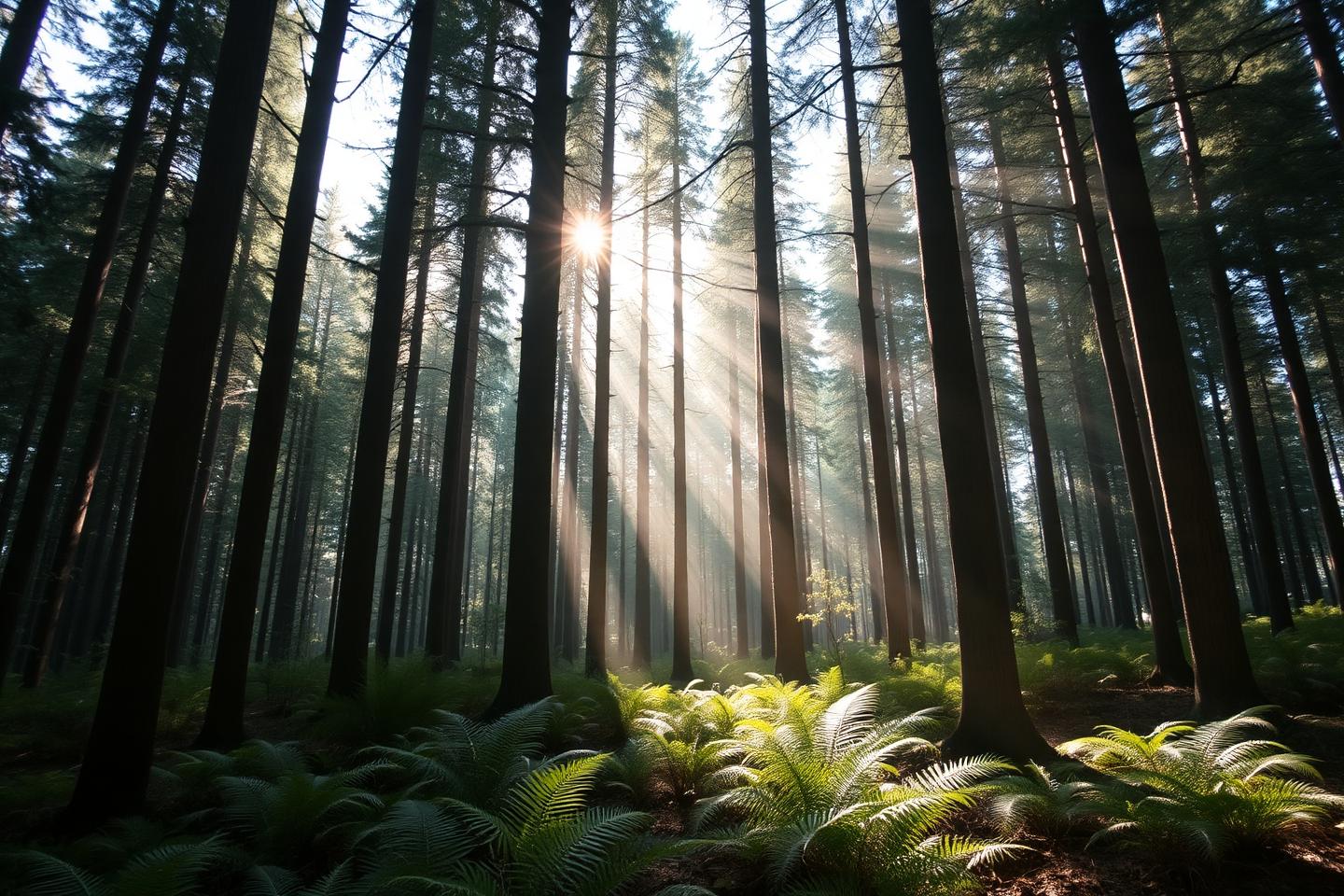
A forest isn't a collection of trees: it's a three-dimensional structure in which each height offers distinct conditions of light, moisture, and temperature. This internal variation explains much of the biodiversity these environments hold.
The layers of a forest
- Canopy: connected treetops that intercept most of the light and rain.
- Understory: young trees and shrubs adapted to shade.
- Herb layer: ferns, mosses, and seedlings near the ground.
- Litter layer: decomposing leaves and branches that feed the soil.
- Root system: an underground network that supports the trees and interacts with fungi.
The role of soil
In many tropical forests, the soil is surprisingly poor: almost all the nutrients are held in living biomass and litter. Recycling is fast — leaves fall, decompose, and return to the roots in a short time. This explains why removing vegetation cover impoverishes the area so quickly.
Forests and the water cycle
Trees return part of the water they absorb to the atmosphere through a continuous process of transpiration. On a regional scale, this flow influences air humidity and rainfall patterns. Forest cover also slows the speed of rainwater over the ground, reducing erosion and flood peaks.
Fragmentation: a less visible threat
Beyond direct deforestation, dividing large continuous areas into small fragments deeply alters the forest. Exposed edges become drier and hotter, which changes species composition. Populations isolated in fragments have less genetic exchange and a higher risk of local disappearance.
Ecological corridors
Strips of vegetation linking fragments allow wildlife to move and seeds to disperse. They're one of the most widely used strategies for reducing the effects of fragmentation in already altered landscapes.
What visitors can do
- Stay on marked trails to avoid compacting the soil and shallow roots.
- Do not remove plants, seeds, fruit, stones, or pieces of wood.
- Avoid introducing seeds and organisms: clean boot soles between different areas.
- Respect fire restrictions, which are absolute during dry periods.
Conclusion
Conserving a forest means conserving structure, not just the number of trees. A replanted area takes decades to recover the complexity of a mature forest — and some ecological relationships may never return. For updated data on forest cover, consult official monitoring sources.
Sources and further reading
External links lead to third-party websites, whose content is not controlled by Natural Horizons.
More articles

Nature parks and the importance of conservation
How protected areas work, what zoning means, why visiting rules exist, and what role the visitor plays in that system.
How to respect nature during a visit
Leave-no-trace practices applied to everyday visiting: waste, trails, wildlife, noise, fire, and coexisting with local communities.
Newsletter
Get new stories and inspiration about natural landscapes straight to your inbox. Signing up is optional and you can unsubscribe anytime via the link in every email.